What is the ruby wedding anniversary?
The ruby wedding anniversary is the 40th year of marriage, and its material is ruby.
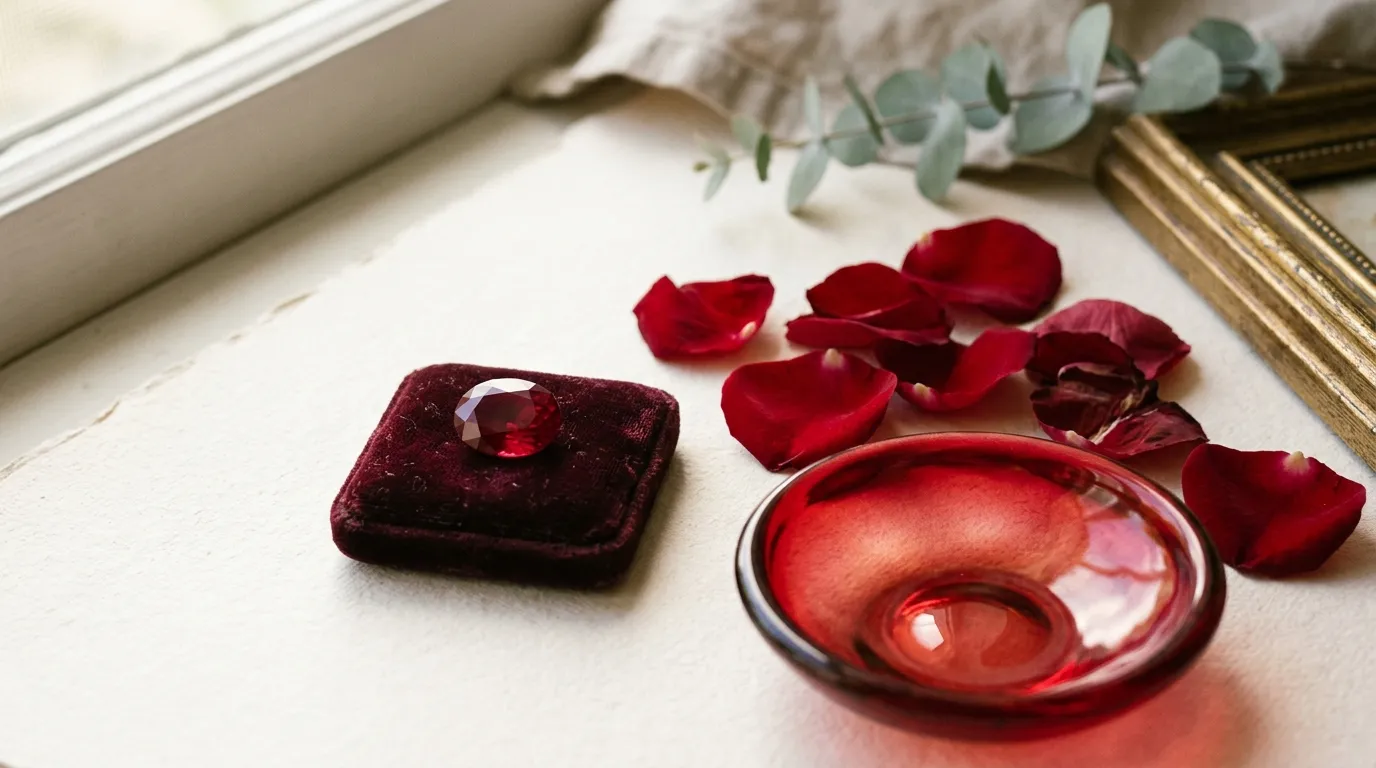
The ruby wedding anniversary is 40 years of marriage. Ruby is the material set against year 40 on the British list.
That is the answer. Below: why forty is a newer anniversary than it feels, what you are actually buying when you buy a ruby, and the disclosure rules that decide whether the price you are quoted is reasonable.
Forty is a more recent anniversary than it looks
Only two anniversaries reach back that far, and forty is not one of them. Debrett's describes the 25th and the 50th being marked with silver and gold wreaths; the ruby wedding was written in afterwards, as the list stretched across the Victorian era and into the twentieth century. the silver wedding page covers where the sequence came from.
So the ruby wedding carries less history than the silver or golden, and rather more retail. That is not an argument against marking it. It is an argument for marking it however you like, because there is no ancient custom to breach.
Does the 40th get a message from the King?
No. The ruby wedding is twenty years short of the threshold, which is the diamond wedding at 60. The qualifying anniversaries, and how to apply.
What you are actually buying when you buy a ruby
Ruby is the red variety of the mineral corundum. Sapphire is the same mineral in other colours, which is why the two turn up together in the same parts of the world and the same jewellers' cases.
Two things dominate the price, and neither is obvious from looking at the stone.
Treatment. A large share of rubies on the market have been treated to improve colour or clarity. Treatment is legitimate and commonplace; what matters is that it is disclosed, because an untreated stone and a treated one of the same appearance are very different propositions in price. Trade nomenclature and disclosure are codified internationally in the Blue Books published by CIBJO, the World Jewellery Confederation, which UK jewellers work to.
Origin and whether it grew in the ground at all. Laboratory-grown rubies are chemically the same material and cost a fraction of the price. Again the issue is not legitimacy but disclosure: a lab-grown stone must be described as such, not sold as natural.
The practical version for a fortieth anniversary: ask, in writing, whether the stone is natural or laboratory-grown and whether it has been treated. A reputable jeweller will answer without hesitating. Hesitation is the answer.
Why one ruby glows and another looks flat
Two rubies of the same size and roughly the same colour can look completely different across a shop counter, and the reason is geological rather than cosmetic.
The Gemological Institute of America sets it out. Ruby is one variety of the mineral corundum; sapphire is another. Pure corundum is colourless, and it is trace elements caught in the crystal structure that produce the colour. In ruby that element is chromium, and the more chromium present, the stronger the red - running from an orangy red through to a purplish red.
Chromium does something else as well: it can cause the stone to fluoresce, which adds to the intensity of the red.
Whether that happens depends on where the ruby formed. The most renowned rubies - from Myanmar, the Himalayas and northern Vietnam - typically form in marble. Marble has a low iron content, so marble-hosted rubies lack iron, and many of them have an intense red and fluoresce red under ultraviolet light, including the ultraviolet in ordinary sunlight. Rubies formed in basalt instead carry more iron, which makes them darker and less intense, and which masks the red fluorescence and removes the glow.
So the stone that seems to light up from inside in daylight and the one that reads as dark red are not the same product at different prices. They are different rocks, and the price difference is real rather than a markup.
What to ask before you spend anything
Four questions, in this order. A reputable jeweller will answer all four without hesitating, and will put the answers in writing.
- Is it natural or laboratory-grown? Laboratory-grown rubies are chemically the same material at a fraction of the price. Perfectly legitimate; must be described as such.
- Has it been treated, and how? A large share of rubies on the market are treated to improve colour or clarity. Also legitimate, also commonplace, also a material fact about the price.
- Does it come with an independent report, and from whom? At fortieth-anniversary budgets this stops being optional.
- What is the return position if an independent valuation disagrees? The answer to this one tells you most of what you need to know about the seller.
None of this is about catching anybody out. Treatment and laboratory growth are normal parts of the trade. The whole issue is disclosure, and disclosure is exactly what the trade's own nomenclature rules exist to require.
Ruby as a colour, which is what most people actually do
Real rubies at a size worth looking at are expensive, and most fortieth anniversaries are marked in ruby red rather than in ruby. Nobody minds, and nobody should.
Red glass, garnet, ruby-toned enamel, deep red roses, a red-bound book, forty red anythings - all of it reads correctly, because the material on the list has always been a prompt rather than an instruction. Debrett's says so itself - the list carries no obligation.
What people actually give
Jewellery is the obvious route and the expensive one. The alternatives that land well at forty years tend to be about the length of the marriage rather than the stone: something that gathers the four decades up rather than marking the number.
The thing worth avoiding is an object engraved "40 years" and nothing else. The number is the occasion; the two of them are the subject. A gift that records only the figure gets looked at once.
The years either side: the UK anniversary list in full. For ideas and budgets see our 40th anniversary gift guide; the pearl wedding is the 30th and the golden wedding is the 50th.
Written by Craig Fearn, Printed Weddings.
Also in the milestones
Try it
Upload one photo and see the two of them in every style we paint. Free, watermarked, no sign-up, about twenty seconds.
Questions
Questions, answered
How many years is a ruby wedding anniversary?
+
Forty years of marriage, and ruby is the material set against year 40 on the British list.
Do you get a card from the King for a 40th wedding anniversary?
+
No - the first anniversary that qualifies is the diamond wedding at 60, so a couple at forty has another twenty years to go. Silver at 25 and gold at 50 do not qualify either.
Are most rubies treated?
+
A large share of rubies on the market have been treated to improve colour or clarity. That is legitimate and commonplace - the issue is disclosure, because a treated stone and an untreated one that look alike are very differently priced. Trade nomenclature and disclosure are codified in CIBJO's Blue Books, which UK jewellers work to. Ask whether a stone is natural or laboratory-grown and whether it has been treated, and expect a straight answer.
Does a 40th anniversary gift have to be an actual ruby?
+
No. Debrett's describes the anniversary list as “merely a suggestion, not a prescriptive set of instructions”. Most fortieth anniversaries are marked in ruby red rather than in ruby - red glass, garnet, deep red flowers, a red-bound book - and that reads perfectly well.