What are the traditional wedding anniversary symbols?
The UK traditional list pairs a material with each anniversary year (paper, wood, tin, silver, gold and more) building from fragile to enduring as the years pass.
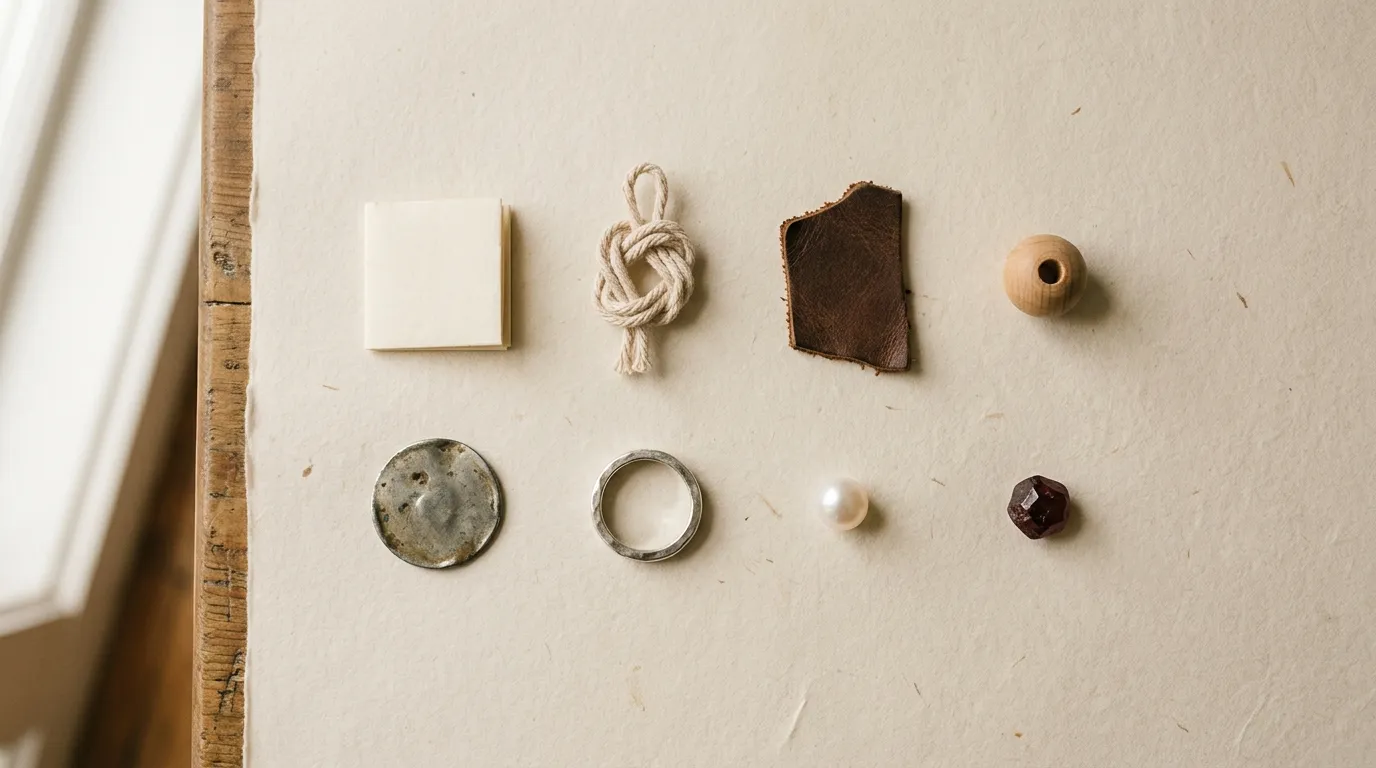
The traditional wedding anniversary symbols are materials, one per year, running from paper at the first to platinum at the seventieth. They are a British convention rather than a rule, and they mean rather less than the gift industry implies - but where they do mean something, it is worth knowing.
The logic behind the sequence
The materials are not random. They start flimsy and end in stone and metal, and the progression is the point: paper, then cotton, then leather, then wood, then tin, then silver, then gold. A marriage is supposed to become more durable, and the gifts track that.
It is a folk logic rather than a documented scheme - nobody published a rationale - but it is legible enough that the early years explain themselves. Paper tears. Cotton is separate threads made into one cloth. Wood has grown. By the time you reach silver and gold you are dealing in materials that hold value indefinitely.
Which symbols are actually old
Most of them are not, and this is the part usually left out.
Debrett's describes medieval couples marking the 25th and the 50th with silver and gold wreaths, calling them comparatively rare events. Silver and gold are the genuinely old symbols. Everything else - the paper, the cotton, the leather, the tin - was added afterwards, through the Victorian era and then the twentieth century, as the list was extended to cover more years.
So when a card tells you that the fourth anniversary is traditionally fruit and flowers, "traditionally" is doing a lot of work. It means Victorian at the earliest.
Where the modern list came from, and why it disagrees
Alongside the traditional list sits a "modern" one, and the two part company at roughly a third of the years - most visibly at the 30th, where traditional gives pearl and modern gives diamond.
The modern list is usually dated to 1937 and credited to the American National Retail Jeweler Association, now Jewelers of America. That attribution reaches us through Cookie Lee's Wedding Anniversaries: From Paper to Diamond (Ryland Peters & Small, 2001) rather than a surviving 1937 document, so it is well-supported rather than proven. You will also see it credited to the Chicago Public Library; that version circulates widely and does not hold up.
What is not in doubt is what the modern list does. It fills in every year the traditional list skipped and substitutes materials that can be sold in a shop - clocks at one, china at two. A trade association giving every year of a marriage a purchasable object is a merchandising calendar, and that is a useful thing to know when a "modern" symbol turns out to be jewellery.
What the symbols do and do not mean
They do not carry a settled meaning. There is no authority that publishes what tin signifies, and where you see a confident explanation of a material's symbolism it has generally been written to sell that material.
What the symbols genuinely do is remove the blank page. Knowing the year is wood gives you a constraint to be inventive inside, which is a real service. Debrett's is explicit that the list is "merely a suggestion, not a prescriptive set of instructions".
Treat a symbol as a prompt. If it produces nothing anyone would want, it has done its job by being ignored.
The symbols that carry something other than sentiment
Two years are different, for reasons that have nothing to do with meaning.
The 14th is ivory, and you cannot legally buy it. The Ivory Act 2018 bans dealing in ivory, with narrow registered exemptions. The dates, the five species and the exemptions are set out on the UK anniversary list. In practice the fourteenth is marked with ivory as a colour - cream, bone, ivory silk.
The 60th is diamond, and it is the first anniversary to qualify for a Royal message. Only the 65th, the 70th and every year after it follow, so neither silver at 25 nor gold at 50 makes the list - which surprises most people. See how to apply, and the deadlines.
The named years
A handful of years have a name as well as a material, and the name is usually what people are reaching for: the silver wedding at 25, the pearl wedding at 30, the ruby wedding at 40, the golden wedding at 50, the diamond wedding at 60 and the platinum wedding at 70.
The years in between have a material but no name in ordinary use. Nobody says "the tin wedding".
The long version: the full UK list, every year, material and name, including the years where the traditional and modern conventions disagree.
Written by Craig Fearn, Printed Weddings.
Also in the first years
Try it
Upload one photo and see the two of them in every style we paint. Free, watermarked, no sign-up, about twenty seconds.
Questions
Questions, answered
What are the traditional wedding anniversary symbols?
+
Materials, one per year - paper at the first, cotton at the second, leather at the third, wood at the fifth, tin at the tenth, silver at the twenty-fifth, gold at the fiftieth, diamond at the sixtieth and platinum at the seventieth. Debrett's publishes the most widely recognised British version.
Are the anniversary symbols actually ancient?
+
Only two of them. Debrett's describes the 25th and the 50th being marked in the Middle Ages with silver and gold wreaths, and calls those comparatively rare events, so silver and gold are the genuinely old symbols. The rest were added during the Victorian era and the twentieth century as the list was extended.
Do the anniversary materials have official meanings?
+
No. There is no authority that publishes what each material signifies, and confident explanations of a material's symbolism have usually been written by somebody selling that material. Debrett's describes the list as “merely a suggestion, not a prescriptive set of instructions”.
Why do the traditional and modern lists disagree?
+
Because they were written for different purposes. The traditional list is a folk sequence running from flimsy to durable and thinning out after fifteen years. The modern list, usually dated to 1937 and credited to a jewellers' trade association, fills in every year and substitutes goods that can be sold in a shop.