What's a good personalised engagement present?
A personalised engagement present is one built from something specific to the couple (their photo, their names, their date) rather than a generic object with a name added on.
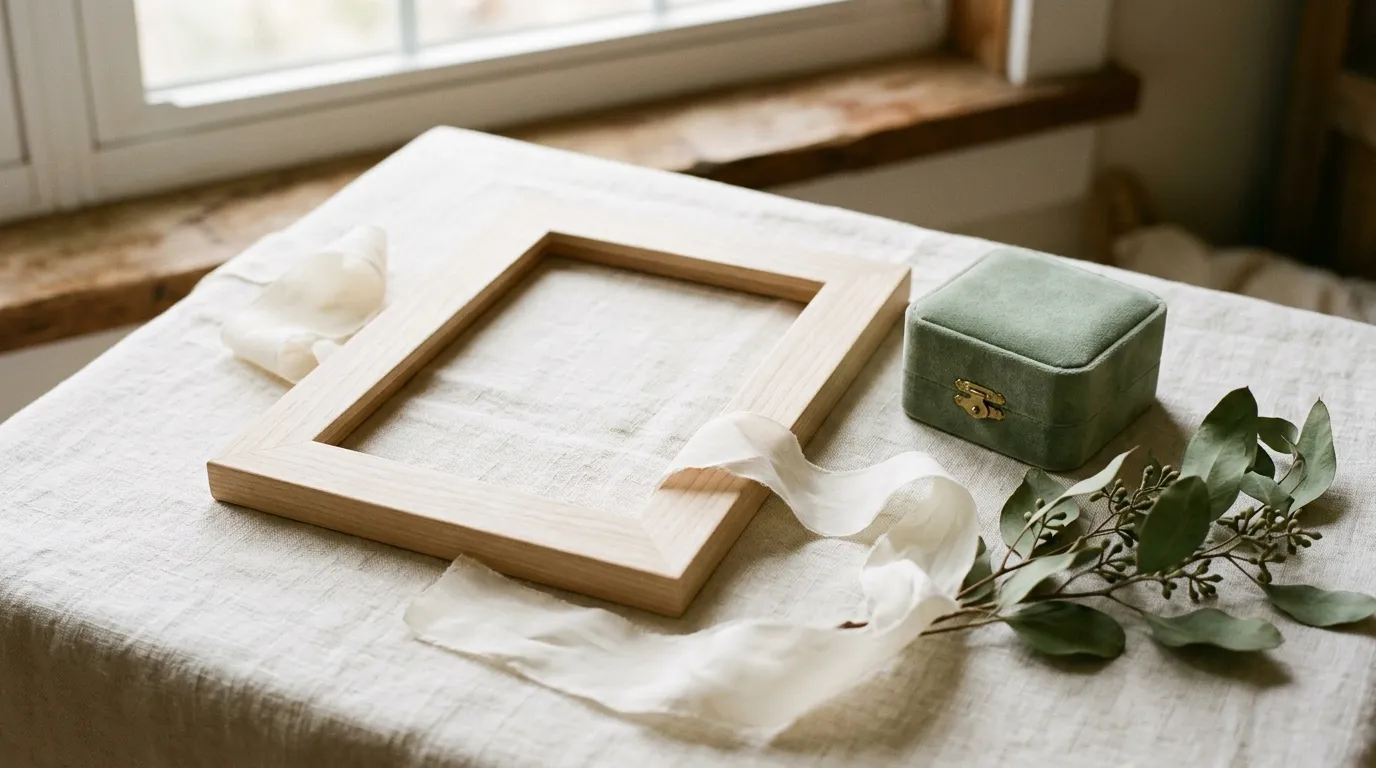
Start here: nobody owes the couple a present at this stage. Debrett's says so outright, and who buys the engagement gift quotes them in full. A personalised one is therefore a choice rather than a duty, and that changes what makes it a good choice.
You're giving it because you want to mark the moment. That points at one particular kind of object, and away from most of what gets sold under this heading.
What "personalised" actually buys you
Personalisation is sold as a feature and is really a filter. Adding two names to a mass-produced item does not make it personal; it makes it non-returnable.
The distinction worth drawing is between an object with their details printed on it and an object that could only have been made for them. The first is a stock item with a field filled in. The second is specific, and it is the only version worth paying more for.
A useful test before buying: if you swapped the names for another couple's, would it be exactly as suitable? If yes, you are buying stock with a field filled in.
Why an engagement present is a hard brief
Harder than a wedding present, for two reasons nobody mentions.
There is no list. A wedding has a gift list precisely because guessing is difficult. An engagement has none, so you are guessing about the taste of two people who may not yet live together.
The couple is mid-transition. Household objects are risky because the household may not exist yet, or may be about to change. That rules out a great deal of what gets marketed for this occasion.
What survives both problems is anything that marks the moment rather than furnishing a home: something to keep, look at, or read, rather than something to use.
The photograph problem, and why it is an opportunity
Debrett's advises couples announcing an engagement to post a good photograph, and notes it can be anything from a professional shot to a snapshot taken on a friend's phone - the point being that the image should evoke who they actually are.
Which describes the situation most newly engaged couples are in: they have exactly one picture from the day, it was taken on a phone, and it is doing an enormous amount of work. It is on their social media, it is what everyone has seen, and it exists nowhere else.
That is the gap. Almost nobody does anything permanent with that photograph, because at the engagement stage nothing is organised yet and the wedding photography is a year away. Treating the one image they already have as worth keeping properly is a genuinely thoughtful present, and it costs less than most of what is sold for the occasion.
A note on privacy, before you make something public
Not every couple wants the engagement broadcast. Debrett's is explicit that there are no rules about how much to share: some couples tell their inner circle individually by call, email, card or letter and keep it off social media entirely, while others post a full account of the proposal.
It matters when choosing a present. A gift that assumes the engagement is public - anything designed to be displayed, announced or shared - can land badly with a couple who have deliberately kept it quiet. If you do not know which sort they are, the safe read is the one they have already given you: match the level of publicity they chose.
What works, and why
- The date, set properly. The day they got engaged is a fixed fact that will not change with the venue, the guest list or anything else. It is one of very few details available this early.
- A photograph, treated as worth keeping. Most couples have exactly one picture from the day itself, usually taken on a phone. Doing something permanent with it is a genuinely thoughtful act.
- Something for the person marrying in. Families consistently under-do this. A present that welcomes the incomer rather than congratulating the couple is remembered.
- A contribution, if you are a parent. Debrett's notes that parents may give a present or an heirloom, or more practically may offer to contribute financially to the wedding or the party. If you are in that group, money is not unromantic - it is the most useful thing available.
What to avoid
- Anything with a wedding date on it. They do not have one, and if they do it can still move.
- Mr & Mrs anything. Presumptuous at the engagement stage, and increasingly wrong about what the couple will be called.
- Home goods for a home that does not exist. The classic engagement-gift mistake.
- Novelty with a joke on it. The joke has to last as long as the object does, and it will not.
How much to spend
Less than you would on the wedding present, because the wedding is the gift-giving occasion and this one is deliberately not. Marking both? Keep this one clearly the smaller.
And if you are giving nothing at the engagement and something at the wedding, that is the convention working exactly as intended.
Worth reading next: who is actually expected to give one and what to write in the card. For the buying-focused version, our engagement gift guide covers ideas by budget.
The wider path: getting engaged.
Also in getting engaged
Questions
Questions, answered
Do you need to give an engagement present at all?
+
No. Debrett's is clear that none is expected of anyone. Where a gift does appear it tends to come from the couple's parents, sometimes as an heirloom and sometimes as money towards the day itself. Who buys the engagement gift gives their wording in full.
What makes a personalised engagement present actually personal?
+
Whether it could only have been made for them. Adding two names to a stock item makes it non-returnable rather than personal. A quick test: if you swapped the names for another couple's, would it be exactly as suitable? If so, you are buying stock with a field filled in.
What should you not give as an engagement present?
+
Anything carrying a wedding date, which does not exist yet and can move; “Mr & Mrs” items, which presume both the timing and what the couple will be called; household goods for a home that may not exist yet; and novelty items whose joke has to outlast the object.
How much should you spend on an engagement present?
+
Less than on the wedding present. The wedding is the gift-giving occasion and the engagement deliberately is not - Debrett's advises that an engagement party should not sit too close to the wedding precisely because presents should not be expected. Giving nothing at the engagement and something at the wedding is the convention working as intended.