What do you write in a wedding card?
What you write in a wedding card should be short, warm and sincere: congratulate the couple, add one thing that's genuinely about them, and stop there.
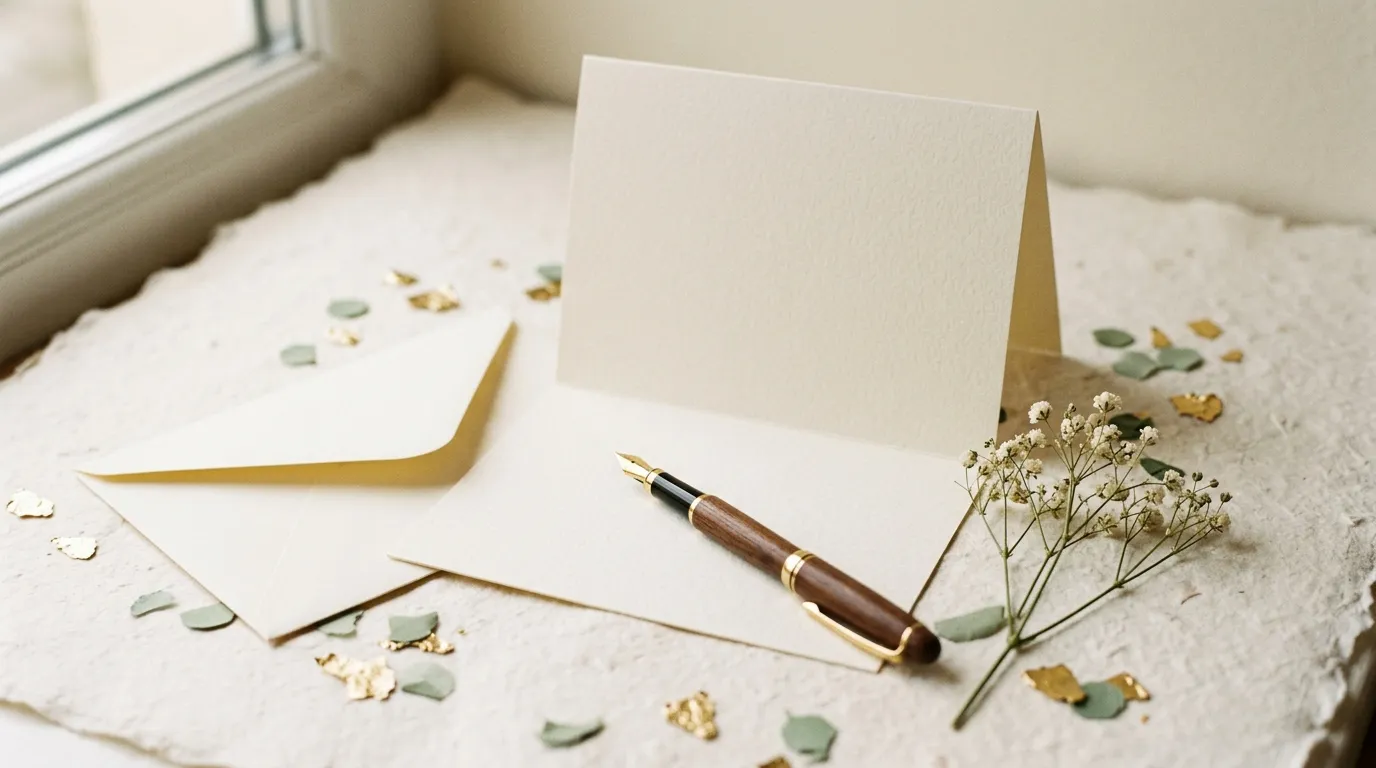
Short, warm and specific. A wedding card is read once on the day, and then - unlike almost everything else bought for a wedding - it is often kept for decades in a box with the others.
That is the whole case for spending five minutes on it rather than thirty seconds.
The structure that works
Four short parts, and you can drop any of them except the third.
- Congratulate them. Once, properly. Repeating it in three different phrasings is what people do when they have nothing else to say.
- Say something about the day. If you are writing on the day itself, one true observation about it - the ceremony, the setting, the moment one of them cried.
- Say something specific about them. The part that matters. One thing you actually know about this couple that could not be written on anyone else's card.
- Wish them something. Short. Resist the urge to write a blessing.
If you write only the third part, you have written a better card than most of the pile.
What to write, by who you are
Close friend. Warmth first, humour second, and keep the humour affectionate rather than about marriage as an institution. You can reference how they met or how long this took; you cannot make jokes about escaping.
Family. Say something about welcoming the person marrying in. Families consistently forget to do this in writing, and it is remembered for a very long time when someone does.
Colleague. Sincere and brief beats familiar. Two good sentences from a colleague read far better than a strained attempt at intimacy.
Plus one who barely knows them. Congratulate them and thank them for including you. That is a complete and appropriate card.
What to leave out
- Marriage-is-hard humour. "Ball and chain", "last chance to escape", "rather you than me". It is a keepsake; it ages in a drawer.
- Advice. Nobody has asked for your view on what makes a marriage work, and a card is a poor venue for it.
- Anything about children. Ever, from anyone.
- Money talk. Do not mention what you have given or reference the cost of anything.
- Anyone's ex. Not even as a joke, not even a very good one.
Handwriting, and other practicalities
Write it before you go, not in the car. Cards written in a rush in a car park are visibly cards written in a car park.
If your handwriting is genuinely difficult to read, write more slowly rather than less - the effort shows and is itself part of the message. Sign it in a way that makes clear who you are: a couple both signing, or a first name alone where the surname is needed, causes real confusion when the couple work through the pile weeks later.
If you are bringing the card with a present on the day, attach it to the gift or hand it over separately and say so. Debrett's advises labelling presents clearly and asking on arrival where they should be left - the same applies to the card, which otherwise becomes detached from the thing it explains.
If you are the couple: write back
Thank-you notes after a wedding are the convention, and Debrett's treats a written note after the event as the gracious step even for guests thanking hosts.
Keep a list as you open presents. Every couple who did not do this wishes they had.
Related: wedding gift etiquette and how much to spend. For an anniversary rather than a wedding, see what to write in an anniversary card.
The wider path: the wedding.
Written by Craig Fearn, Printed Weddings.
Also in the wedding
Questions
Questions, answered
What do you write in a wedding card?
+
Congratulate them once, say one true thing about the day, say one specific thing about this couple that could not be written on anyone else's card, and wish them something briefly. The specific sentence is the part worth the effort - it is what makes a card worth keeping.
What should you not write in a wedding card?
+
Marriage-is-hard jokes, unsolicited advice, anything about children, references to what you have spent, and anybody's ex. The card is a keepsake that sits in a box for decades, which is exactly why the throwaway line does not survive.
Should you write the card before the wedding?
+
Yes. A card written in the car park reads like one. Write it at home, and sign it so it is obvious who you are - a first name alone, or a couple both signing without a surname, causes genuine confusion when the couple work through the pile weeks later.
Do the couple have to reply to wedding cards?
+
Cards alone do not require a written reply, but presents do, and thank-you notes after a wedding are the convention. Keep a list as you open the presents - every couple who skipped that step wishes they had not.